One of the biggest challenges in my work is not helping people feel better.
It’s explaining what just happened afterward.
When someone experiences chronic pain relief in minutes, improved mobility, emotional release, or a deep sense of calm after years of tension, the mind immediately searches for an explanation.
Some people call it nervous system regulation. Some call it energy. Some call it placebo. Some dismiss it completely.
But maybe the real issue is that we still don’t have a shared language for these experiences.
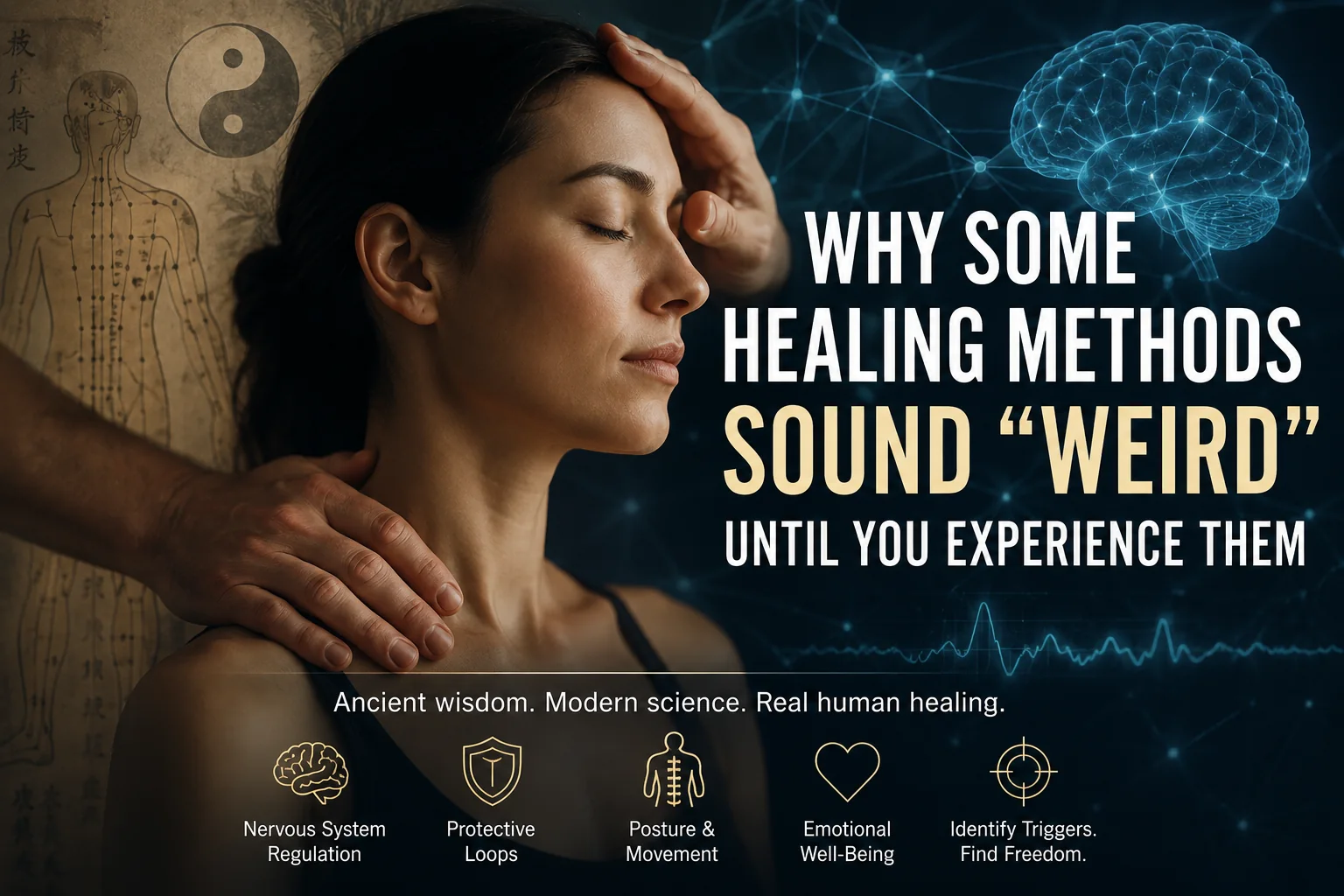
Over the last few years, I’ve spent a lot of time studying the connection between chronic pain, trauma, posture, nervous system regulation, movement, touch, emotional stress, and the body’s protective responses. The deeper I go, the more I realize that many ancient healing systems were observing real human patterns long before modern science had the tools to explain them.
Systems like Chinese medicine, osteopathy, applied kinesiology, and body-based therapies often described the body through the language available at the time. They spoke about energy, flow, meridians, tension, and imbalance. Modern neuroscience uses different words: predictive processing, neuroplasticity, autonomic regulation, sensory integration, and threat perception.
Different language. Similar observations.
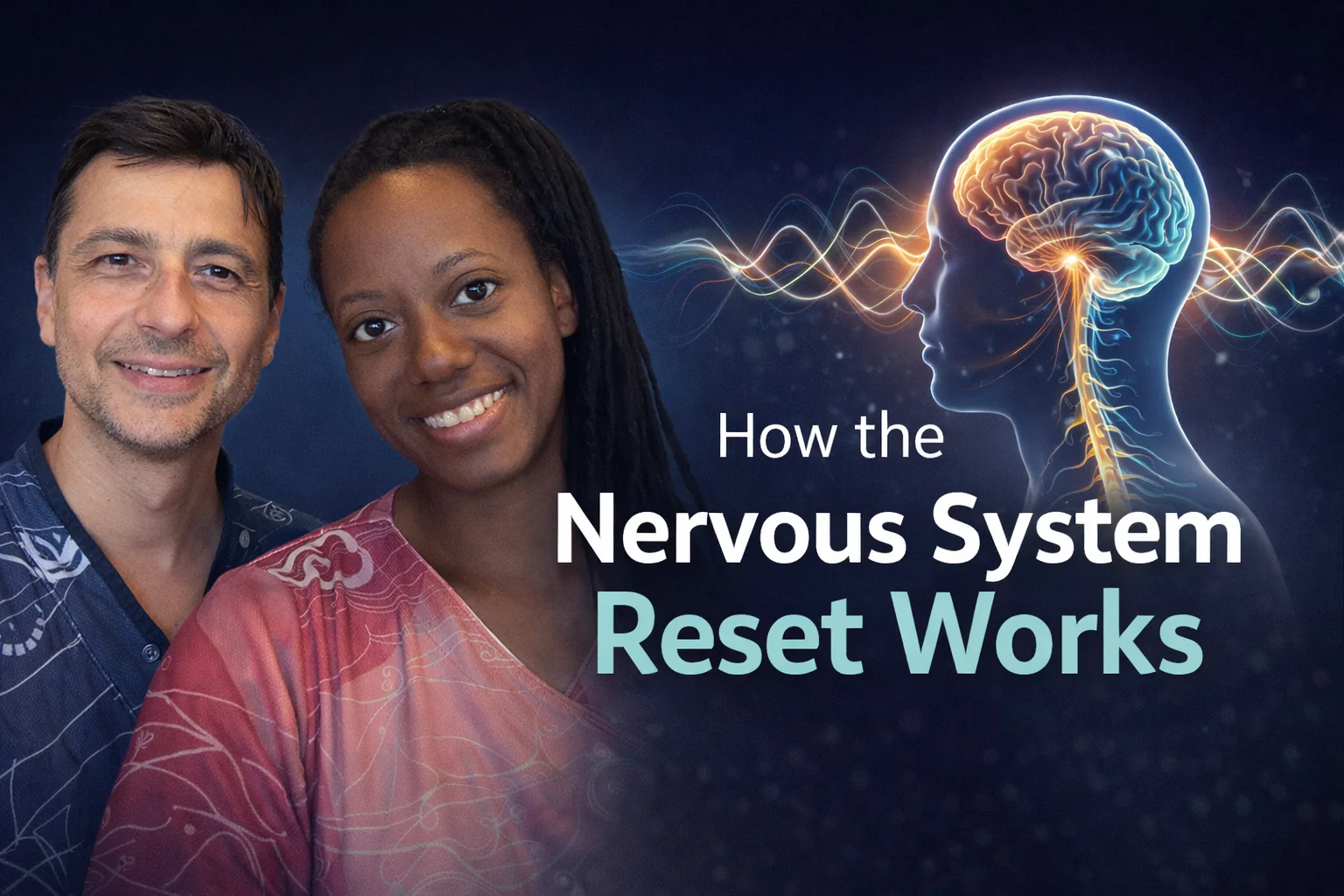
In my experience, many chronic symptoms behave less like permanent damage and more like protective loops.
The body learns. The nervous system predicts. The brain protects.
Sometimes that protection becomes excessive, outdated, or stuck.
This is why two people can have the exact same MRI finding while only one experiences debilitating pain. It’s why emotional stress can create physical symptoms. It’s why someone can feel significantly better during vacation, after a breakthrough emotional moment, or immediately after a body-based intervention.
The nervous system is not simply reacting to tissue.
It is constantly interpreting reality.
And when the brain perceives threat, the body changes:
-
muscles tighten
-
posture shifts
-
breathing changes
-
digestion changes
-
inflammation changes
-
attention narrows
-
energy drops
Over time, these patterns can become deeply conditioned.
What fascinates me is that many people experience temporary relief long before they intellectually understand what happened. Sometimes the body changes first, and the explanation comes later.
That creates tension because our culture prefers explanations before experiences.
If something cannot be easily explained, people often label it as strange, mystical, or unscientific. At the same time, I also believe it is important not to blindly explain everything with vague terms like “quantum healing” or “energy frequencies.”
We should stay grounded.
We should observe carefully.
We should remain honest about what we know and what we do not yet fully understand.
For me, the most important thing is not defending a philosophy.
It’s helping people regain freedom in their bodies and lives.
I’ve seen people carrying years of tension suddenly breathe deeply again. I’ve seen posture change in minutes. I’ve seen chronic pain patterns shift after emotional triggers were addressed. I’ve seen people reconnect with parts of themselves they thought were gone forever.
Do I believe modern science already fully explains all of this?
No.
But I also don’t believe we should dismiss lived human experience simply because our current models are incomplete.
History has shown us many times that observation comes before explanation.
At one point, people used magnetism without understanding electromagnetism. People used fermentation before microbiology existed. Human beings have always interacted with forces they did not yet fully understand.
I believe we are still early in understanding how deeply the nervous system shapes pain, emotion, movement, identity, and healing.
And I believe the future of healthcare will involve a much deeper integration between:
-
neuroscience
-
emotional processing
-
movement
-
touch
-
autonomic regulation
-
and the body’s remarkable ability to adapt and heal
That bridge is where my work lives.
Not in blind belief. Not in rigid skepticism. But in direct observation, pattern recognition, and helping people reconnect with the version of themselves that already knows what health feels like.
Learn how sessions work, meet the practitioners, or book a session.