Some pain stories are structural. Some involve a nervous system that has been under pressure for years. Most real people do not fit neatly into one box.
Stephen’s story is a good example.
When he first came to Go Pain to Power, he was dealing with severe lower-back and sciatic pain, more than 20 years of tinnitus, and the constant stress of never knowing when his body would shut him down. He described roughly four out of five days as miserable. On the worst days, his leg would not cooperate, the pain felt like being burned with a torch, and he could end up on the floor.
He also had a serious structural problem at L5-S1. Nervous-system work could help reduce the load his body was carrying, but it could not rebuild a collapsed spinal segment. That required a spine surgeon.
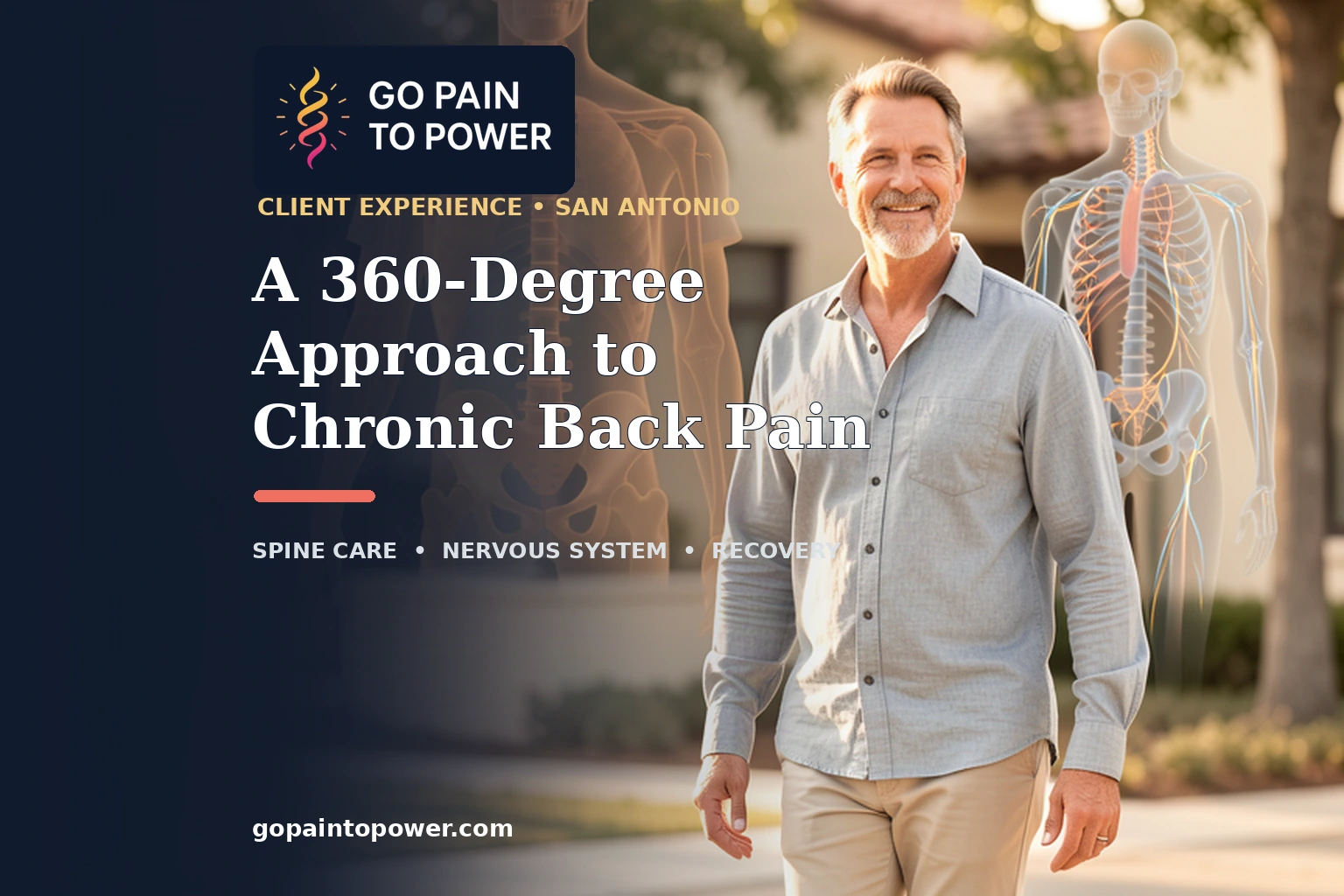
Stephen needed both. That is the point of a 360-degree approach.
The first part: helping the nervous system settle
Before surgery, Stephen worked with me on nervous-system regulation at Go Pain to Power.
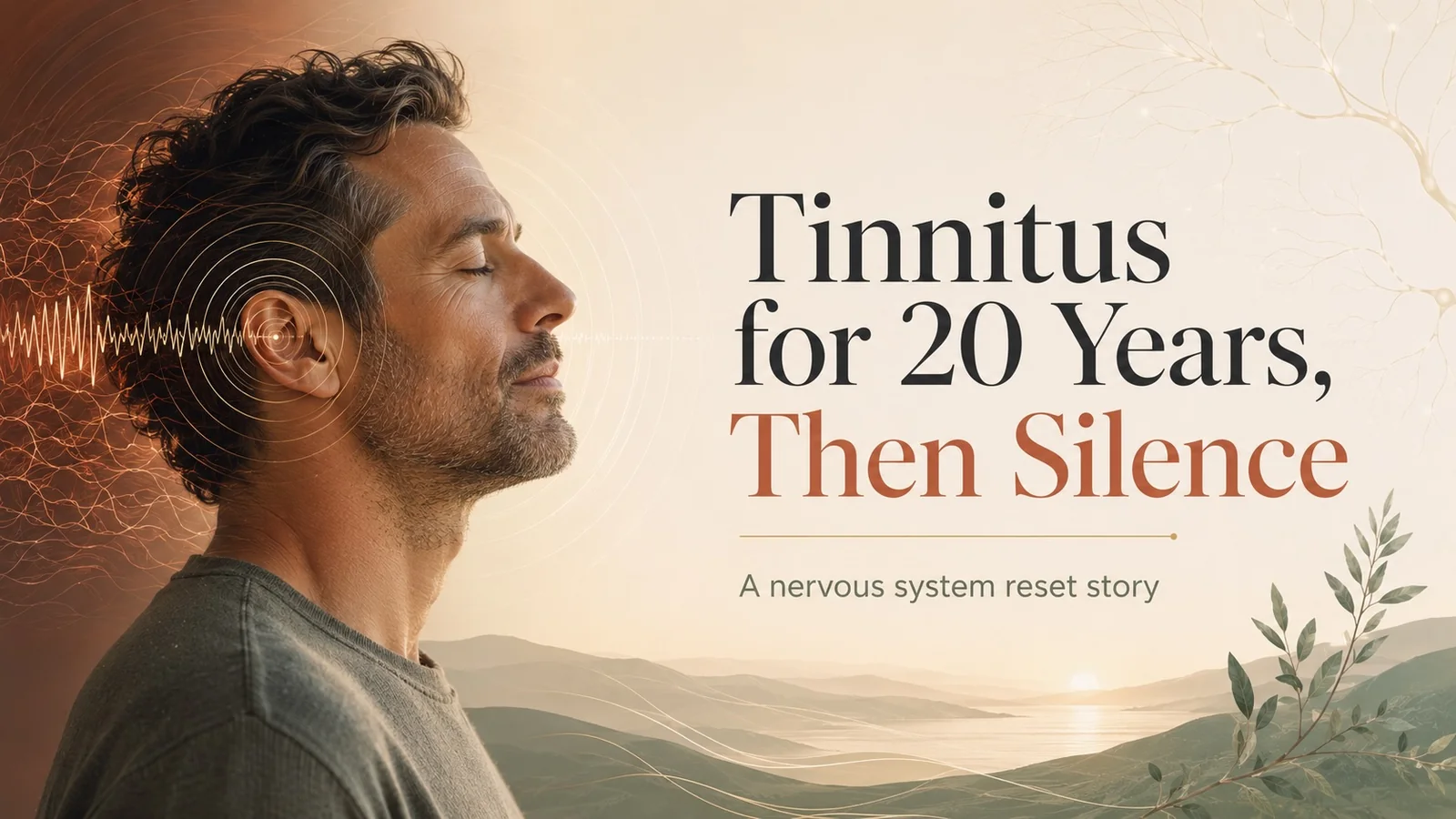
His most noticeable early change involved tinnitus. The ringing had been with him for more than 20 years and could become almost unbearable when his back pain flared. After an earlier nervous-system reset, he reported that the tinnitus disappeared for almost two weeks. When some of it returned, another session reduced it again, and he reported silence at the final check.
His pain pattern also changed. Stephen went from describing four out of five days as miserable to approximately one bad day out of six or seven. The structural problem was still there, and he still needed surgery. But his day-to-day experience was different. He had more good days, less sensory overload, and greater confidence that a flare did not automatically mean he would remain stuck there.
You can read the earlier part of Stephen’s story in Tinnitus for 20 Years, Then Silence.
The second part: addressing the structure
Stephen’s lower spine required medical and surgical care. On July 27, 2026, Dr. Frank Kuwamura, a board-certified spine surgeon in San Antonio, performed the operation Stephen had been preparing for.[1]
Stephen reported that Dr. Kuwamura placed an artificial disc, fused the level, and stabilized the repair from the front and back. He said the area had become so compressed that the procedure was difficult, and he had lived with serious pain for about six years before reaching this point.
Less than a month later, Stephen described the change as “night and day” and “life changing.”
He reported his pain at 1 out of 10. Before surgery, he had reached the point where he could not walk. At his postoperative visit, Dr. Kuwamura cleared him to walk as much as he wanted, while still protecting the fusion and delaying his return to work.
The nervous-system work did not replace surgery. Surgery did not erase the value of helping Stephen regulate before and after it. Each addressed a different part of the problem.
The third part: supporting recovery
Stephen took his recovery seriously. He walked, slowed himself down when his surgeon told him to, accepted another six weeks away from work, and began paying closer attention to the early signals his body was giving him.
He also reported using BPC-157, TB-500, CJC-1295, and Thymosin Alpha-1 as part of his personal recovery plan. Stephen said he began Thymosin Alpha-1 before surgery and continued the regimen afterward. He had been skeptical at first, but said his abdominal incision was nearly sealed within 14 days and had not been painful. He connected that experience with the recovery support he had chosen.
This is a patient-reported account, not a controlled comparison or a recommendation that another person use the same products. Surgery, time, rest, walking, nutrition, and his chosen supports were all occurring in the same recovery period.
His recovery involved more than the procedure itself.
What working hand in hand can look like
Go Pain to Power operates within the clinic of Dr. Kuwamura, whose practice evaluates and treats cervical and lumbar spine conditions.[1][2] That setting makes room for a broader conversation.
A person may need imaging, medical treatment, rehabilitation, or surgery. The same person may also be dealing with guarding, poor sleep, stress, fear of movement, old trauma, tinnitus, or a nervous system that has spent years expecting the next wave of pain.
Working hand in hand means each professional stays in their lane while keeping the whole patient in view.
Dr. Kuwamura addressed Stephen’s severe structural problem. My work focused on the nervous-system side of his experience: helping reduce sensory overload, lower the frequency of severe days, and give his system a better state to return to. Stephen took responsibility for the daily work of recovery and made his own choices about additional support.
That is the 360-degree approach we want people to experience when they come here.
Why this approach matters for chronic back pain
Back pain can involve both structural findings and a wider mix of sleep, stress, inflammation, movement, previous injuries, fear, and nervous-system processing.
A complete plan starts with what the person in front of us actually needs instead of forcing every case into a purely structural or purely nervous-system explanation.
For Stephen, the result came through stages:
- nervous-system work that reduced part of the symptom burden before surgery;
- skilled structural care from Dr. Kuwamura;
- a careful recovery period with walking, rest, and attention to body signals;
- continued support as the fusion heals.
He still had healing restrictions at his latest visit. There was mild discomfort near the posterior hardware and a strange, non-painful sensation around the abdominal surgical area. The fusion was not complete. This was excellent progress, not the end of the recovery process.
The outcome is more credible because the recovery is still in progress. A good story does not require pretending every symptom disappeared or that one intervention deserves all the credit.
Looking for a more complete approach in San Antonio?
If you are looking for chronic back pain support in San Antonio and have been bouncing between symptoms, scans, stress, and uncertainty, we can help you look at the wider picture.
Go Pain to Power provides individualized nervous-system-informed wellness sessions in San Antonio. Our work can complement appropriate medical evaluation and treatment; it does not replace a physician, surgeon, physical therapist, or other licensed healthcare professional.
Learn how our sessions work, explore the conditions and symptom patterns we support, or request a private session.
Are you a healthcare professional? Explore our referral, reassessment, and small-pilot pathway.
To your healing,
Shankar Poncelet and Antréa Ferguson
Go Pain to Power
Sources
[1] MD Spine Care — Dr. Frank Kuwamura
[2] MD Spine Care — Providers
A note about scope: This article describes one client’s reported experience. Individual responses vary. Go Pain to Power offers educational wellness services and does not diagnose, treat, or cure medical conditions. Peptide products mentioned above were reported by the client and are not prescribed or recommended by Go Pain to Power. Medical and surgical questions should be discussed with an appropriately licensed healthcare professional.